
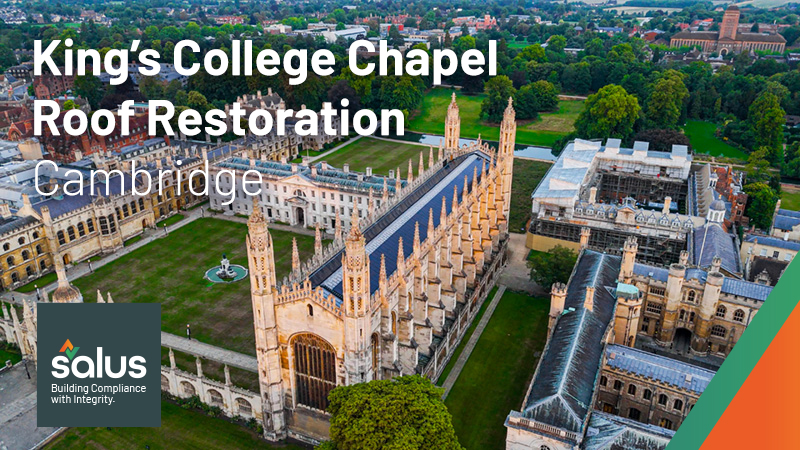
King’s College Chapel Roof Restoration & Renewable Energy Integration
Project Summary
Project: King’s College Chapel Roof Restoration
Location: Cambridge
Client: King’s College, Cambridge
Service: Building Control Consultancy
Building Status: Grade I Listed
Key Features: Roof restoration, lead replacement, photovoltaic installation, heritage compliance
Supporting the restoration of one of Cambridge’s most iconic buildings
King’s College Chapel is one of the UK’s most recognisable historic buildings — an internationally renowned landmark at the heart of Cambridge.
Salus was appointed to support the roof restoration project at the Grade I listed chapel, helping ensure the works complied with Building Regulations while respecting the historic significance of the building.
Alongside essential roof repairs, the scheme also included the discreet integration of photovoltaic (PV) panels as part of the College’s wider sustainability ambitions.
A Heritage Project with Modern Ambitions
The project focused on the repair and refurbishment of the chapel roof, which had begun to suffer from deterioration and water ingress over time.
At the same time, King’s College wanted to improve the environmental performance of the building by introducing renewable energy generation — a highly sensitive challenge on a Grade I listed structure.
The proposal required extensive consideration around:
- Historic preservation
- Building performance
- Listed building requirements
- Long-term durability
- Visual impact
As Andrew Dean from Salus explains:
“The uniqueness of the scheme was really what stood out. It wasn’t the most technically complex project from a Building Regulations perspective, but balancing sustainability with a Grade I listed building made it unusual.”
Salus’ Role
Salus became involved early in the project and supported the team throughout the works.
The role included:
- Reviewing Building Regulations requirements
- Supporting compliance discussions
- Monitoring roof detailing and ventilation arrangements
- Undertaking site inspections throughout construction
- Ensuring the works protected the long-term integrity of the historic fabric
Because the chapel is an unheated building, there was no requirement to significantly upgrade thermal performance in the way a modern occupied building would normally require.
Instead, the focus became ensuring that the roof repairs and new detailing would:
- Protect the structure long-term
- Prevent future moisture or condensation issues
- Integrate successfully with the existing historic fabric
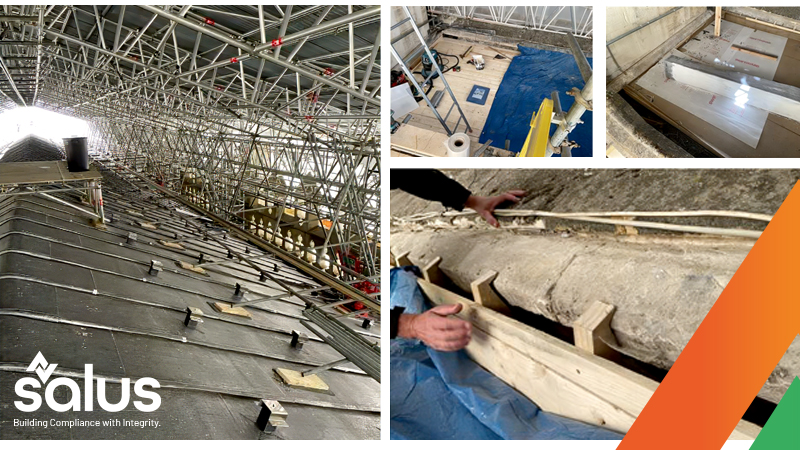
Preserving Historic Fabric
A key part of the restoration involved retaining as much of the original character of the building as possible.
The existing lead roof coverings were carefully removed, melted down and reformed into new lead sheets before being reinstalled — a process that reflected the conservation-led approach taken throughout the scheme.
Specialist contractors also carried out detailed repairs to timber structures and roof elements where deterioration had occurred over time.
Andrew Dean said:
“It was about making sure we didn’t do anything that made the historic fabric worse. The approach throughout the project was very practical but very respectful of the building.”
Integrating Photovoltaics into a Grade I Listed Building
One of the most distinctive elements of the project was the installation of photovoltaic panels on the chapel roof.
Introducing renewable technology onto a building of this significance required extensive consultation and approvals through heritage and listed building processes.
There were understandable concerns around:
- Visual impact
- Preservation of the chapel’s appearance
- Potential impact on the historic roofline
However, the final installation was designed carefully so the panels remain effectively hidden from ground level.
The completed system now contributes renewable energy back into the wider College estate.
“When you stand at ground level, you would never know the photovoltaics are there.”
The project demonstrated that sustainability improvements can be introduced successfully within highly protected historic environments when approached carefully and collaboratively.
A Collaborative Approach
The scheme brought together a highly experienced project team, including specialist conservation professionals, contractors and heritage consultants.
Salus worked collaboratively with the wider team to ensure compliance requirements were addressed without compromising the conservation objectives of the project.
The practical and proactive approach taken across the scheme helped ensure:
- Smooth project delivery
- Sensitive restoration work
- Effective long-term outcomes
- Successful integration of modern technology into a historic structure
The Outcome
The completed project delivered:
- A fully restored chapel roof
- Improved long-term weather protection
- Renewable energy generation through discreet PV installation
- Preservation of the building’s historic appearance and character
For Salus, the project demonstrates the importance of applying the same level of care, professionalism and collaboration across every scheme — whether modern commercial developments or nationally significant heritage buildings.
